Showing posts with label Ziggy fka CP Ziggyman. Show all posts

Sunday, August 20, 2017

Sunday Sweets!

Sunday is full of SWEETS!  Each week we will showcase the sweeter side of Cairns.  If you have a sweet filled Cairn and would like us to consider YOUR picture for an upcoming "Sunday Sweets!" send it to us at cpcrnblog@gmail.com (All photo submissions become the property of CPCRN and may be used for fundraising, promotion and/or outreach purposes.).

Rocky

Abbie


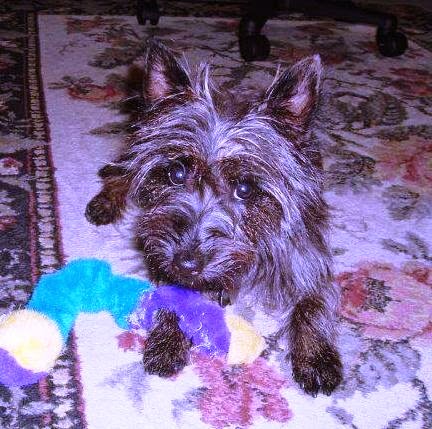
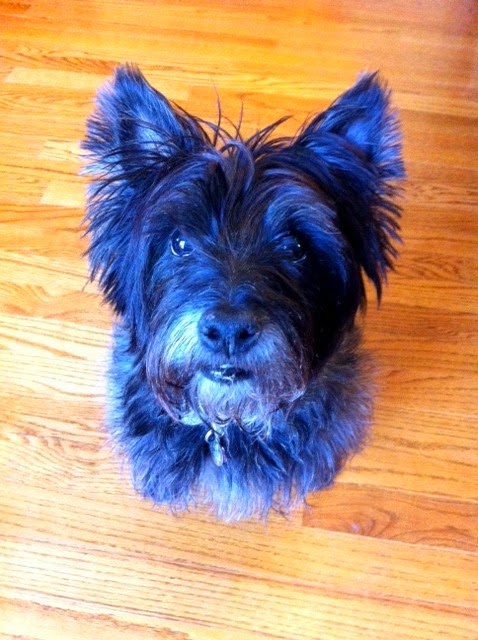
Ziggy fka CP Ziggyman


Mookie Wilson fka CP Messan

Casey

Cove

Dangela


Dochas

Buzzbee
Harper
Lori fka CP Laurier

Beau

Bijoux
Christian and Noah fka CP Kashtuk


Sunday, September 21, 2014

Sunday Sweets!

Sunday is full of SWEETS!  Each week we will showcase the sweeter side of Cairns.  If you have a sweet filled Cairn and would like us to consider YOUR picture for an upcoming "Sunday Sweets!" send it to us at cpcrnblog@gmail.com (All photo submissions become the property of CPCRN and may be used for fundraising, promotion and/or outreach purposes.).

Rocky VII - Happy Birthday!

Sweet Abbie


Ziggy fka CP Ziggyman

Mookie Wilson fka CP Messan

Casey

Foster Cove

Foster Dangela


Foster Dochas

Buzzbee
Foster Harper
Lori fka CP Laurier

Beau

Bijoux
Christian and Noah fka CP Kashtuk


Thursday, September 4, 2014

Housetraining in Easy Steps!

Contributed by a Col. Potter Volunteer

Good Communication is an Essential Housetraining Tool!

Are you thinking about adding a new Rescued Cairn to your family?  There are many things to consider, and lots of planning to do.  We offer many great tips to help you integrate your New Cairn into your home, so it is good to know that some of this advice will also will apply to your current resident dogs.  Housetraining is a great example, whatever the age of your dog or puppy! 

Think Ahead 
About Your New Dog’s Housetraining Needs!

  • Expect confusion & mistakes for the first few days even in a trained dog

  • It is vital to use a crate and/or a confinement area so as to not allow opportunities for accidents in the first week or two.  Set your dog up to succeed.

  • If using a crate, it should be just large enough for your dog to turn around in and stretch out.

  • If using a confinement area, confine to one uncarpeted room (the kitchen is ideal) with pet-proof gates.

  • You can always relax the regime later, but initially, be consistent in your schedule.  Set your dog up to succeed in the early weeks.

  • Provide extra opportunities to eliminate outside:

                        *First thing in the morning

                        *Just Before or Right After eating

                        *Every 2-3 hours

                        *Last thing before bed

                        *If dog doesn’t eliminate on any particular outing,
                          try again an hour later


  • Accompany dog to eliminate – go with him rather than sending him outside so that:

                        a. You know whether he’s gone or not, and

                        b. You can reward at the right instant – praise or
                             a small food treat as he finishes


  • Go to the same spot to make it easier, or at least the same kind of surface

  • Praise and reward all outdoor elimination for the first few days – later you can stop but it is ok to continue praising if you want.

  • Interrupt him (“Ah! Ah! Let’s go outside!”) at the start of any mistakes indoors, then hustle him outside to finish.  If he finishes outside, praise and reward.  Note: interrupt him, do no punish him.  Punishment is not a good idea early in a relationship with a new dog, and of dubious value at any time in housebreaking.  And, even more importantly, if the dog makes a mistake unsupervised, it is your fault not the dog’s fault.  Never punish your new dog for making a mistake somewhere if he is unsupervised – there is zero connection to the act that happened in the past.

  • Clean all accidents thoroughly!  Borax works great!

  • Add one extra room of your home to your dog’s allowed area every few days if your dog is successful.  Supervise closely every time a room is added.

  • Gradually extend the duration between opportunities to go out, adding a half hour per week.  It is reasonable to expect an adult dog to hold on for 4-5 hours.  Of course, many dogs can hold on longer but it is always more humane not to have to (except at night)

  • Sudden onset of indoor elimination in a trained dog may indicate a medical problem – consult your veterinarian immediately before getting behavior help.

Getting a puppy?  The same rules apply, except you will need to make more frequent trips outside to the potty spot in the beginning, stretching the intervals slowly as the puppy grows and matures.  Consistency is the key!   You need to make an appropriate schedule and stick to it to create patterns that will set your puppy up for success.

Good luck! And thank you again for opening your heart and home to a rescued Cairn!


Rescuing one Cairn will not change the world,

but it will surely change the world for that one Rescued Cairn


Read More About It:

It’s Always Best to Start at the Beginning!
http://cairnrescue.blogspot.com/2014/03/its-always-best-to-start-at-beginning.html

I’m Not Sure we’ve been Properly Introduced!
http://cairnrescue.blogspot.com/2014/02/im-not-sure-weve-been-properly.html

There’s No Place Like Home!
http://cairnrescue.blogspot.com/2014/03/theres-no-place-like-home.html

Toto: The Other Side of the Story!
http://cairnrescue.blogspot.com/2014/02/toto-other-side-of-story.html

Look at Me!
http://www.cairnrescue.blogspot.com/2014/04/look-at-me.html

Relationship Centered Dog Training:
http://cairnrescue.blogspot.com/2014/06/relationship-centered-dog-training.html

Understanding Resource Guarding:
http://cairnrescue.blogspot.com/2014/08/no-you-cant-have-this-its-mine.html

Nothing in Life is Free!
http://www.cairnrescue.blogspot.com/2014/04/nothing-in-life-is-free.html

I Might Be Wrong:
http://cairnrescue.blogspot.com/2014/06/healthy-doubt-is-thinking-twice.html

No Problem!  10 Training Tips That Work!
http://cairnrescue.blogspot.com/search?q=training+tips

The Importance of Using a Crate:
http://cairnrescue.blogspot.com/search?q=training+tips&updated-max=2010-12-14T14:00:00-06:00&max-results=20&start=13&by-date=false


Sunday, August 3, 2014

Sunday Sweets!

Sunday is full of SWEETS!  Each week we will showcase the sweeter side of Cairns.  If you have a sweet filled Cairn and would like us to consider YOUR picture for an upcoming "Sunday Sweets!" send it to us at cpcrnblog@gmail.com (All photo submissions become the property of CPCRN and may be used for fundraising, promotion and/or outreach purposes.).

Foster Raelynn

Lizzie

Ziggy fka CP Ziggyman

Halle fka CP Bianca

Rebeka

CP Gonzo

Foster ShaSha

Alistar
 
The Original Simon Rubin Paddy

Baxter fka CP Bruin and Merry

Jack Frost

Foster Tyke

Logan


Thursday, July 31, 2014

Discover the Details about your Dog!

This Cairn puppy may like to steal and chew on shoes – unless, of course, he is just resting at Mom’s feet after a long walk?  Careful observation will help you make an informed decision about the Best next step to take!


"…Assumptions about a dog's understanding or capabilities, unless confirmed by careful observation of the dog himself, can lead to training problems, undermine or destroy your relationship with the dog, and in some cases, are tantamount to cruelty."    Suzanne Clothier

The Fine Art of Observation

The importance of observing what your dog can tell you
about himself, and how you can use that information
to make humane training decisions.

Understanding, analyzing and resolving behavior or performance problems requires a good deal of detective work.  As the famous Sherlock Holmes knew, no detail, however small, is insignificant.  The more acutely you are able to observe the dog, the more accurate your analysis will be.  Acute observation and attention to detail is the hallmark not only of great detectives, but of great trainers.

One of my most bemusing moments as a trainer came when I was working with a dog who had bitten several people.  As I worked the dog over a variety of obstacles, his owner commented several times, "I can't believe he hasn't bitten you yet!"  I never could decide if she was simply amazed or just disappointed.  I wasn't bitten because I watched the dog for even the smallest sign that he was beginning to feel threatened.

With this dog, subtle changes in his breathing pattern, a compression of the lips and a constriction of the pupils gave me the only clues I needed.  At that point, with no further clues and without pushing until I saw more dramatic signs, it was a simple matter to shift our activity to something less threatening and allow the dog to calm down.  Ignoring these clear but subtle signs would have undoubtedly caused the behavior to escalate until perhaps we had a full blown aggressive episode ending in a bite.  (This dog has gone on to become a wonderful companion who easily earned his CGC certificate, and a photo of him in Santa's lap at a "Photo With Santa" fund raiser remains my favorite of him.)

Dogs live and act in a world of exquisitely subtle signals in their interactions with each other.  Our observations and communications in our interactions with them must seem unbelievably coarse at times to these sophisticates of non-verbal communication.  Turned around the other way, we would perceive such inattentiveness to our subtle signals as rude, uncaring or perhaps simply stupid.  Fortunately for us, dogs bring to the human-dog relationship their wonderful powers of observation, allowing them to be highly aware of our posture, breathing, muscular tensions, and facial expressions, often reacting to changes of which we are not aware.  Training or behavior problems often result from the dog's response to signals we unknowingly have sent.  Unfortunately, the dog is often blamed rather than the handler.

Our responsibility as handlers and trainers is to attempt to be as skilled in our observations and non-verbal communications with our dogs as they are in their interactions with us.  Our reliance on verbal communication is perhaps one of the biggest stumbling block in the training process.  As a rule, any concept that cannot be fully explained in a non-verbal way is a concept that a dog will be unable to grasp.

Learning to become skilled as an observer requires that you practice these skills.  As the artist Frederick Franck said in The Art of Seeing, "We often look, but we rarely see."  Information gathered through careful observation is crucial.  Without such information, you cannot make any informed decisions on the dog's behalf.

A sad example is the Sheltie presented to me at an Integrated Approach seminar.  The handler's complaint was that no matter what technique they used, the dog was "lazy" and continued to sit crooked.  For over a year, she and her instructor had used increasing amounts of compulsion to force the dog to sit straight.  A quick observation showed that the dog moved with his entire body bent slightly to the right, and his tail did not hang straight but over his right hock.  Naturally, when he sat, he was unable to sit straight - he couldn't even walk in a straight line.  I found it shocking that not once did the handler or the instructor take the time to really look at the dog - the answer was there all along.  The dog was doing his very best, but had a real, physical limitation that prevented him from achieving the goal set for him by his handler.

Take the time to observe your dog carefully and often.  Like us, dogs change, have off days, injure themselves and get confused.  If you are observant about your dog's capabilities and limitations, you can make informed decisions.  Assumptions about a dog's understanding or capabilities, unless confirmed by careful observation of the dog himself, can lead to training problems, undermine or destroy your relationship with the dog, and in some cases, are tantamount to cruelty.


"Copyright © 2013 by Suzanne Clothier. Used by permission of Suzanne Clothier. All rights reserved. For more information about Suzanne please visit SuzanneClothier.com"

Read More Training Tips from Suzanne Clothier:


Sunday, July 27, 2014

Sunday Sweets!

Sunday is full of SWEETS! Each week we will showcase the sweeter side of Cairns. If you have a sweet filled Cairn and would like us to consider YOUR picture for an upcoming "Sunday Sweets!" send it to us at cpcrnblog@gmail.com (All photo submissions become the property of CPCRN and may be used for fundraising, promotion and/or outreach purposes.).

Rye

Nessa

Teddy fka CP Tadd

Foster Timothy

Ziggy fka CP Ziggyman

Callie

Gina

Harry

LB

Tate